Unlocking Creative Potential with Globe Kid Boy Vector Illustrations
In the fast-paced world of digital design, finding assets that strike the perfect balance between professionalism and approachability can be a challenge. This is where the Globe Kid Boy Vector steps in as a versatile solution for creators who need to communicate global connectivity, education, and youthful optimism without relying on clichéd stock imagery. Whether you are designing a landing page for an EdTech startup or crafting social media graphics for a non-profit, this specific style of flat cartoon illustration offers a unique visual language that resonates with modern audiences.
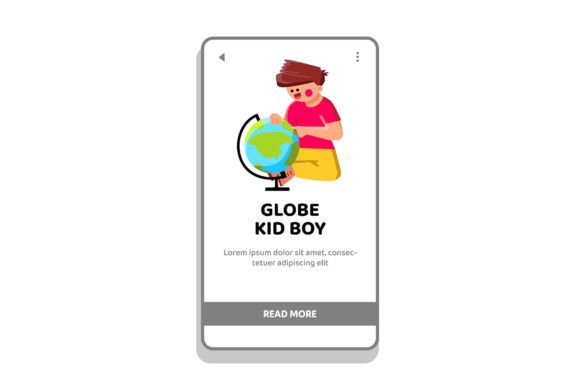
The concept revolves around a cheerful young boy interacting with a globe, symbolizing knowledge, curiosity, and international awareness. But beyond the literal interpretation, the utility of this asset lies in its adaptability. By utilizing vector formats like EPS alongside high-resolution JPGs, designers gain the flexibility to scale these images for everything from mobile app icons to large-format print banners without losing clarity. Let’s explore how this specific illustration style can elevate various projects and why it has become a staple for forward-thinking creative teams.
Bridging the Gap in Educational Technology
One of the most immediate applications for the globe kid boy vector is within the educational sector. EdTech platforms are constantly seeking ways to make learning feel less like a chore and more like an adventure. Traditional imagery of classrooms and textbooks can feel sterile or outdated. In contrast, a happy group of children engaging with a globe suggests active participation and joy in discovery.
For UX designers working on e-learning modules, incorporating child art elements helps lower the cognitive load for younger users. It creates a welcoming environment that encourages exploration. When a student logs into a platform and sees a friendly, flat cartoon character holding the world, it subtly reinforces the idea that knowledge is accessible and fun. This is particularly effective for language learning apps, geography tools, or cultural exchange programs where the core value proposition is global connection.
Moreover, the "school male" archetype represented in these vectors avoids gender stereotypes by focusing on universal themes of curiosity. While the primary subject may be a boy, the surrounding context often includes diverse elements that appeal to all students. The use of bright, flat colors aligns with current UI trends, ensuring that the illustrations feel native to the digital interface rather than tacked-on decorations.
Enhancing Corporate Social Responsibility Campaigns
Businesses today are under increasing pressure to demonstrate their commitment to global issues, sustainability, and community development. Marketing teams often struggle to visualize these abstract concepts without appearing preachy or corporate. The Globe Kid Boy Vector offers a humanizing element that softens corporate messaging.
Consider a multinational corporation launching a scholarship program or a sustainability initiative. Using a vector illustration of a child looking at a globe can evoke feelings of hope and future potential. It shifts the narrative from "look what we did" to "look who we are helping." This emotional resonance is crucial for building brand trust. Because the image is a vector, it can be easily recolored to match specific brand guidelines, ensuring consistency across annual reports, website headers, and internal presentations.
The flat design style is particularly advantageous here because it translates well across different media. A complex photograph might lose detail when shrunk down for a mobile notification, but a clean vector line remains crisp. This ensures that the message of global responsibility is communicated clearly, regardless of where the audience encounters it.
Streamlining Workflow for Freelancers and Agencies
For freelance graphic designers and creative agencies, time is money. Searching for the perfect stock photo, dealing with licensing restrictions, or hiring an illustrator for a simple concept can eat into project budgets. Having access to high-quality assets like the globe kid boy web flat cartoon illustration streamlines the production process significantly.
The availability of both JPG and EPS formats addresses two distinct needs. The JPG is ready for immediate use in quick mockups, social media posts, or blog headers where editing isn't required. It allows for rapid prototyping during client pitches. On the other hand, the EPS file provides the raw materials for customization. Designers can isolate the boy, the globe, or background elements to create custom compositions. Maybe the client wants the boy pointing to a specific continent, or perhaps they want to change the color palette to match a seasonal campaign. With vector files, these adjustments take minutes rather than hours.
This flexibility also supports A/B testing in digital marketing. Agencies can quickly generate multiple variations of an ad creative—one with a blue theme, another with green—to see which resonates better with the target audience. The ability to tweak vector assets on the fly empowers marketers to be more agile and data-driven in their visual strategies.
Navigating Cultural Sensitivity and Representation
When using illustrations that depict people, especially children, cultural sensitivity is paramount. The Globe Kid Boy Vector typically employs a stylized, flat cartoon approach that minimizes specific ethnic markers, making it more universally relatable. This neutrality is a strength in global marketing campaigns where the goal is to appeal to a broad, international audience without alienating any particular group.
However, designers should still exercise judgment. While the character is generic, the context matters. Pairing the illustration with inclusive copy and complementary visuals ensures that the message remains respectful and representative. For instance, if the globe kid is used in a campaign about African development, it should be part of a broader visual narrative that includes diverse voices and authentic storytelling, rather than standing alone as a token gesture.
It is also worth noting the limitation of flat design: it can sometimes lack emotional depth compared to photography. To counter this, designers should focus on composition and color psychology. Warm tones can evoke happiness and energy, while cooler tones might suggest calmness and intellect. Understanding these nuances helps in selecting the right variation of the vector for the intended emotional impact.
Practical Tips for Integration
To get the most out of your education girl or school male vector assets, consider the following practical steps:
- Maintain Visual Hierarchy: Ensure the globe kid does not overpower the main call-to-action. Use white space effectively to let the illustration breathe while guiding the user’s eye to the key message.
- Consistency is Key: If you use a flat cartoon style for the globe kid, ensure other icons and illustrations on your site follow the same stylistic rules. Mixing realistic photos with flat vectors can look disjointed unless done with deliberate artistic intent.
- Optimize for Web: Even though you start with an EPS, always export web-ready SVGs or optimized PNGs for final deployment. This ensures fast loading times, which is critical for SEO and user experience.
- Contextual Relevance: Don’t just drop the image in because it looks cute. Ask yourself: Does this reinforce the content? If the article is about local community issues, a globe might be too broad. If it’s about international trade or global education, it’s perfect.
Ultimately, the Globe Kid Boy Vector is more than just a clipart image; it is a strategic design tool. It bridges the gap between complex global concepts and human emotion, offering a clean, scalable, and versatile asset for modern digital communication. By understanding its strengths and applying it thoughtfully across education, corporate, and creative contexts, designers can create more engaging and meaningful visual experiences.