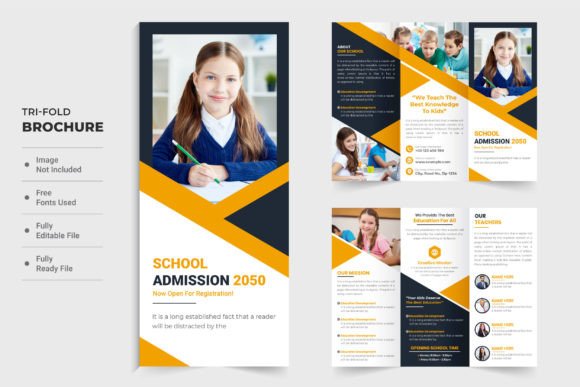
Academic Training Education Brochure: A Strategic Guide for School Marketing
In the competitive landscape of modern education, first impressions are everything. For academic training centers, private schools, and educational institutions, the Academic Training Education Brochure serves as a critical touchpoint between the institution and potential students or parents. It is not merely a piece of paper; it is a strategic communication tool designed to convey trust, showcase facilities, and ultimately drive school admissions. Whether you are an administrator looking to revamp your marketing materials or a designer seeking the right resources, understanding the power and implementation of a well-crafted brochure is essential.
The Role of an Academic Training Education Brochure in Admissions
An Academic Training Education Brochure is a comprehensive marketing document that outlines the curriculum, faculty expertise, campus life, and unique value proposition of an educational institution. In the digital age, where information is abundant, physical and high-quality digital brochures remain a trusted medium for detailed exploration. They allow prospective families to hold tangible proof of an institution's quality.
For many adults navigating the complex decision of selecting a school for their children or themselves, the brochure acts as a bridge. It answers fundamental questions about accreditation, extracurricular activities, and learning outcomes before a single footstep is taken on campus. The goal is to transform a casual inquiry into a committed application by presenting a clear, compelling narrative of the school's identity.
Common Challenges in Educational Marketing
Creating effective marketing materials for schools presents several distinct challenges. One of the primary hurdles is information overload. Institutions often have too much to say—academic achievements, sports teams, arts programs, and alumni success stories—and struggle to condense this into a digestible format. When a brochure becomes cluttered, the core message gets lost, and the reader disengages.
Another significant challenge is visual appeal versus professionalism. Schools must appear innovative and modern while maintaining an aura of academic rigor and tradition. Finding the right balance can be difficult. Many institutions rely on outdated templates that fail to capture the energy of current students or the sophistication of their facilities. Furthermore, budget constraints often prevent schools from hiring top-tier design agencies, leaving them with generic, unmemorable designs that do not differentiate them from competitors.
There is also the issue of adaptability. A static brochure cannot easily be updated when tuition fees change, new facilities are opened, or the curriculum is revised. Without a flexible design system, schools find themselves reprinting materials frequently, which is both costly and environmentally unfriendly.
How a Strategic Brochure Design Addresses These Needs
A well-executed Academic Training Education Brochure directly addresses these pain points by focusing on clarity, visual hierarchy, and modularity. By utilizing a professional trifold layout, designers can organize information logically, guiding the reader through a journey from introduction to call-to-action. This structure ensures that critical details like admission requirements and contact information are always accessible without overwhelming the user.
Color psychology plays a pivotal role here. For instance, a design scheme featuring dark and yellow colors creates a striking contrast that commands attention. Dark tones, such as deep navy or charcoal, convey stability, intelligence, and authority—traits highly valued in education. Conversely, yellow accents inject energy, optimism, and creativity, signaling that the institution is forward-thinking and student-centered. This combination ensures the brochure stands out on a desk or in a digital inbox, making the content more memorable.
Moreover, a vector-based design approach solves the adaptability problem. Unlike raster images that lose quality when resized, vector graphics remain crisp at any scale. This allows institutions to use the same design files for a small flyer, a large banner, or a full-page magazine ad without losing resolution. This flexibility ensures that the brand remains consistent across all marketing channels.
Practical Applications and Outcomes
The practical application of a high-quality brochure extends beyond simple distribution. It serves as a versatile asset for various marketing scenarios:
- Open House Events: During school tours, a physical trifold brochure provides parents with a takeaway summary of what they just saw, reinforcing the positive experience.
- Digital Distribution: A PDF version of the brochure can be shared via email campaigns or embedded on the school website, serving as a downloadable resource for remote inquiries.
- Social Media Integration: Elements from the brochure, such as facility photos or activity highlights, can be repurposed into social media posts to maintain engagement throughout the year.
The outcome of implementing a professional Academic Training Education Brochure is measurable. Schools report higher conversion rates from inquiry to enrollment because the brochure effectively builds credibility. It reduces the number of basic questions staff must answer, allowing them to focus on deeper conversations with serious candidates. Additionally, a cohesive design elevates the perceived value of the institution, justifying premium tuition fees through the demonstration of quality and attention to detail.
Implementation: Customizing Your Design Files
For those looking to implement these solutions, accessing high-quality, editable templates is key. Resources like the Academic Training Center Promotion Template Vector offer a starting point that saves time and ensures professional standards. These templates are typically provided in formats compatible with industry-standard software like Adobe Illustrator.
When you acquire a design file, it usually comes compressed in a ZIP archive containing both Vector (AI/EPS) and JPG formats. The JPG files provide a quick preview, but the true value lies in the vector files. To utilize them, you will need extraction software such as WinZIP or WinRAR. Once extracted, opening the vector file in a design application allows you to modify text, swap images, and adjust color palettes to match your specific school branding.
This customization capability is crucial. No two schools are identical. You might want to highlight a state-of-the-art science lab, a renowned music program, or a unique community outreach initiative. With editable vector files, you can tailor the School Facilities and Activities Brochure Design to reflect exactly what makes your institution special. You can replace placeholder images with real photos of your students and staff, adding an authentic human element that stock photography cannot replicate.
Tips for Effective Customization
- Maintain Brand Consistency: Ensure that the fonts and colors used in the modified brochure align with your school's existing logo and website.
- Focus on Readability: While the dark and yellow theme is bold, ensure there is sufficient contrast between the text and background so that information is easy to read for all ages.
- Highlight Key Benefits: Use the "trifold" sections strategically. Place the most compelling hook on the front panel, detailed information inside, and a strong call to action on the back.
Approaches for Different Users
Different stakeholders may approach the creation of an Academic Training Education Brochure differently based on their goals. School administrators might prioritize the accuracy of data and the inclusion of accreditation seals to build trust. Marketing directors, on the other hand, may focus heavily on the emotional connection, using storytelling and vibrant imagery to evoke excitement.
Graphic designers working within schools or agencies will look at the technical execution, ensuring that bleed lines are correct for printing and that the vector paths are clean for scalability. Meanwhile, parents reviewing the brochure will scan for specific needs: safety measures, class sizes, and teacher qualifications. A successful design anticipates these varied perspectives, balancing administrative rigor with emotional appeal and technical precision.
If you encounter difficulties during the editing process, remember that support is available. Many providers of these digital assets, such as Iftikhar Alam Graphic Store, offer assistance for users who need guidance on modifying their files. Their library includes amazing graphic design digital files suitable for special occasions, family events, or professional promotions. Whether you need a design for yourself, friends, or your institution, having access to reliable, editable resources ensures that your vision is realized accurately.
Conclusion
The Academic Training Education Brochure is far more than a promotional leaflet; it is a foundational element of a school's identity and recruitment strategy. By addressing common marketing challenges through thoughtful design, strategic color usage, and editable vector formats, institutions can create powerful tools that resonate with their audience. Whether you are updating an existing catalog or creating a new one from scratch, prioritizing clarity, customization, and professional quality will yield significant results. Embrace the versatility of modern design resources to tell your school's story effectively and welcome the next generation of learners with confidence.