Visualizing Early Education: The Power of Illustrations Featuring Children Going to School
In the vast landscape of digital design and educational marketing, few images are as universally recognized and emotionally resonant as that of a little boy and girl going to school. This simple yet profound visual concept serves as a cornerstone for communicating themes of learning, growth, and childhood development. Whether you are an educator, a graphic designer, or a parent looking for resources, understanding the significance of this imagery can enhance how we perceive and promote early education.
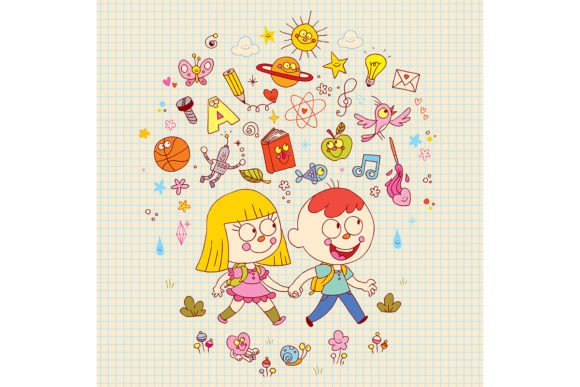
The specific asset known as "Little Boy and Girl Going to School - Learning Education Concept Illustration 1" is more than just a decorative graphic. It is a carefully crafted tool designed to bridge the gap between abstract educational concepts and tangible visual representation. Available as a zipped file containing high-resolution formats like EPS File Illustrator 10 and a massive JPG File 6614px x 6614px, this resource offers versatility that is crucial for modern digital and print media.
Why Visual Concepts Matter in Education
Education is not merely about transferring facts; it is about inspiring curiosity and fostering a love for learning. Visual aids play a pivotal role in this process. When we see an illustration of children heading to school, we are reminded of the excitement, the routine, and the social aspects of schooling. These images help normalize the experience for young children who might be anxious about starting school for the first time.
For educators and content creators, using high-quality illustrations helps in:
- Engaging Young Audiences: Bright, friendly characters capture attention quickly.
- Simplifying Complex Ideas: A visual metaphor can explain the journey of learning better than words alone.
- Creating Emotional Connections: Parents and teachers relate to the innocence and potential depicted in such artwork.
The Symbolism of the Boy and Girl Duo
You might wonder why the illustration specifically features both a little boy and a little girl. This choice is deliberate and significant. It represents inclusivity and equality in education. By showing both genders walking together, the image subtly communicates that learning is a shared human experience, regardless of gender. It promotes the idea that schools are safe, welcoming spaces for all children.
Furthermore, the act of "going to school" implies movement and progress. It is not a static image of a classroom but a dynamic scene of transition. This aligns with the educational philosophy that learning is a journey, not just a destination. The backpacks they carry symbolize the tools of knowledge, while their forward motion suggests ambition and future possibilities.
Technical Excellence: Understanding the File Formats
When downloading creative assets like the Little Boy and Girl Going to School illustration, understanding the technical specifications is vital for maximizing their utility. The package includes two primary formats, each serving a distinct purpose in the design workflow.
- EPS File (Illustrator 10): This is a vector-based format. Vector graphics are made of paths rather than pixels, meaning they can be scaled to any size without losing quality. Whether you need a tiny icon for a website footer or a massive banner for a school bus, the EPS file ensures crisp lines and clean edges. Compatibility with Illustrator 10 means it works with a wide range of software versions, making it accessible for many designers.
- JPG File (6614px x 6614px): This raster format provides a high-resolution bitmap image. At over 6000 pixels in width and height, this JPG is suitable for high-quality prints, such as posters, brochures, or textbook covers. The square aspect ratio also makes it ideal for social media posts, where square images often perform well on platforms like Instagram.
Having both formats in a single zipped file offers flexibility. Designers can use the JPG for quick mockups or web use, while relying on the EPS for professional print production. This dual-format approach saves time and ensures that the visual integrity of the learning education concept is maintained across all mediums.
Practical Applications in Modern Life and Business
How can this specific illustration be used in real-world scenarios? The applications are diverse, spanning various sectors involved in child development and education.
For Schools and Educational Institutions:
Schools can use this image on their websites, enrollment brochures, and welcome packets. It sets a friendly tone and helps alleviate first-day jitters for new students. It can also be used in newsletters to highlight back-to-school events or educational milestones.
For EdTech Companies:
Educational technology startups often need relatable imagery for their apps and marketing materials. An illustration of children going to school can be used in onboarding screens, tutorial videos, or blog posts discussing the benefits of digital learning tools. It grounds the technology in the familiar reality of traditional schooling.
For Publishers and Content Creators:
Authors writing children’s books or educational guides can use this illustration as cover art or chapter headers. Bloggers focusing on parenting tips can use it to break up text and add visual interest to articles about school preparation or study habits.
Common Misunderstandings About Stock Illustrations
There is a common misconception that stock illustrations are generic and lack soul. However, high-quality assets like the Little Boy and Girl Going to School concept are designed with intention. They are not just random drawings; they are crafted to evoke specific emotions and convey clear messages. Another misunderstanding is that vector files are difficult to use. In reality, modern design software makes editing EPS files straightforward, allowing users to change colors, adjust sizes, or integrate the characters into larger compositions easily.
It is also important to note that using such illustrations does not replace original photography but complements it. While photos capture reality, illustrations capture essence. They allow for a level of abstraction that can be more inclusive and universally appealing than specific photographic subjects.
Building a Broader Understanding of Educational Design
To truly appreciate the value of this illustration, one must look at the broader context of educational design. Good design in education is invisible; it facilitates learning without distracting from it. The clean lines and balanced composition of the Learning Education Concept Illustration 1 ensure that the focus remains on the message: education is positive, accessible, and joyful.
Moreover, in an increasingly digital world, the ability to communicate complex ideas visually is a crucial skill. By utilizing high-quality resources, educators and designers can create materials that are not only informative but also aesthetically pleasing. This enhances user engagement and retention, making the learning process more effective.
Conclusion: Embracing the Journey of Learning
The image of a little boy and girl going to school is a powerful symbol of hope, potential, and the universal right to education. By leveraging high-quality digital assets like the EPS and JPG files available in this collection, creators can bring this symbol to life in meaningful ways. Whether for a small blog post or a large-scale advertising campaign, these illustrations provide the visual foundation needed to connect with audiences on an emotional level.
As we continue to navigate the evolving landscape of education, let us not underestimate the power of a simple, well-designed image. It reminds us that at the heart of every educational system, policy, or technology, there are children eager to learn, grow, and discover the world around them. By choosing resources that reflect this truth, we contribute to a culture that values and celebrates the journey of learning.
For those interested in exploring more about educational design principles or finding similar resources, consider looking into graphic design best practices for educators or the psychology of color in learning environments. These topics further deepen our understanding of how visual elements influence educational outcomes.