Cultivating a Love for Reading: The Magic of Cute Children in Library Settings
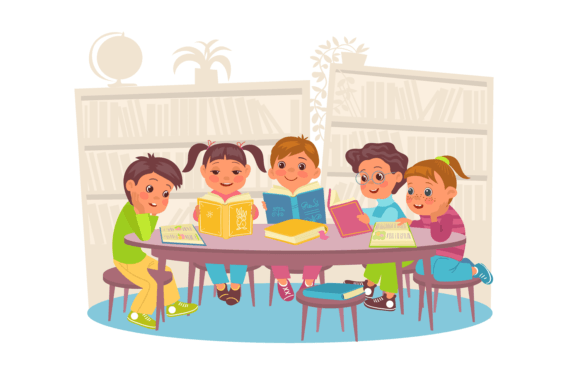
There is a timeless charm to the sight of Cute Children in Library settings. It is a scene that evokes warmth, curiosity, and the quiet promise of future learning. Whether captured in a candid photograph or illustrated as a splendid vector concept EPS, JPG, the image of little students sitting at a table in a reading room tells a story far deeper than just a moment in time. It represents the foundational era of literacy, where elementary school classrooms extend their reach into the vast world of literature study.
In today's fast-paced digital environment, the role of physical libraries and dedicated reading spaces has not diminished; rather, it has evolved. For young learners, these spaces serve as sanctuaries where imagination meets education. When we observe Students Sitti and her peers engaging with open books, we are witnessing the critical development of cognitive skills, empathy, and focus. This article explores the significance of these environments, the dynamics of group learning among funny boys and girls, and how educators and parents can leverage these moments to foster a lifelong passion for knowledge.
The Atmosphere of Discovery in Modern Reading Rooms
The design and atmosphere of a library play a pivotal role in how children perceive reading. A well-curated reading room is not merely a storage facility for books; it is an interactive ecosystem. When Cute Children in Library environments are designed with comfort and accessibility in mind, the barrier to entry for reading lowers significantly. Soft lighting, colorful seating, and tables sized appropriately for small hands create an inviting space where kids feel safe to explore.
Consider the scenario of a group of elementary school students gathered around a large wooden table. In this setting, the social aspect of reading comes to the forefront. Unlike the solitary nature often associated with reading, a library visit encourages shared experiences. When one child finds a fascinating fact or a hilarious illustration, they share it with their neighbors. This communal exchange transforms literature study from a passive activity into a dynamic conversation. The laughter of funny boys and girls flipping through pages creates a positive emotional association with learning, making the act of reading something they look forward to rather than a chore.
Visualizing Learning: The Power of Vector Concepts and Imagery
In the realm of educational materials and marketing, visual representation is key. The concept of Cute Children in Library is frequently utilized in graphic design to communicate themes of innocence, growth, and academic success. High-quality assets, such as splendid vector concept EPS, JPG files, allow designers to create versatile imagery that captures the essence of childhood education without losing resolution. These visuals are essential for creating engaging lesson plans, library brochures, and promotional materials for schools.
When educators use these images to decorate their classrooms or digital presentations, they reinforce the identity of the space as a place of joy. A poster featuring Students Sitti and her friends engrossed in stories can inspire real-life behavior. It sets a visual expectation: "This is what we do here." By surrounding children with imagery that celebrates reading, we subtly encourage them to emulate the behavior depicted. The visual language of education is powerful, and utilizing high-quality graphics ensures that the message of literacy remains clear, vibrant, and appealing to young minds.
Navigating Group Dynamics: From Funny Boys to Focused Scholars
One of the most challenging yet rewarding aspects of managing a classroom or library session is handling group dynamics. Elementary school children are naturally energetic and expressive. The term funny boys and girls perfectly encapsulates the spirited nature of this age group. They bring humor, spontaneity, and sometimes chaos into the reading room. However, when guided correctly, this energy becomes a catalyst for engagement.
Teachers and librarians often find that allowing children to interact while reading fosters better comprehension. If little students sitting at table in reading room are encouraged to discuss the plot of a book or predict what happens next, they are actively processing information. This peer-to-peer teaching method is highly effective. For instance, if a student like Students Sitti struggles with a complex word, a peer might explain it in simpler terms, reinforcing their own understanding while helping a friend.
- Collaborative Storytelling: Groups can take turns reading aloud, building confidence in public speaking.
- Shared Imagination: Discussing characters and settings helps children develop creative thinking skills.
- Social Skills Development: Learning to listen, wait for a turn, and respect others' opinions happens naturally during shared reading sessions.
The key lies in structure. While freedom is good, a complete lack of boundaries can lead to distraction. Effective facilitators set clear expectations before the session begins. They establish rules about voice levels, handling books, and respecting personal space. Once these boundaries are understood, the children are free to explore within a safe framework. This balance allows the Cute Children in Library to enjoy their time without compromising the educational value of the visit.
Integrating Literature Study into Daily Routines
Literature study is the backbone of early education, but its integration into daily life requires intentionality. It is not enough to simply have books available; there must be a culture that values them. Schools and homes that prioritize reading see significant improvements in vocabulary, critical thinking, and emotional intelligence. The presence of Cute Children in Library scenarios should be normalized, not treated as a special event reserved for once a month.
For parents and educators, creating a routine that includes regular library visits or designated reading times at home is crucial. Imagine a weekly schedule where Students Sitti and her classmates spend an hour exploring new genres, from fantasy adventures to non-fiction biographies. This consistency builds habits. Over time, the library becomes a second home, a place where they know exactly where to find their favorite series or where to discover something entirely new.
Furthermore, the transition from picture books to chapter books is a significant milestone. This is often where the support of peers becomes invaluable. Seeing other little students sitting at table in reading room tackling longer texts provides motivation. It removes the intimidation factor and replaces it with a sense of achievement. When children see their friends succeeding, they believe they can too. This collective confidence is a powerful driver for academic progress.
Practical Benefits for Modern Education Workflows
Incorporating library-based learning into modern educational workflows offers several practical benefits. First, it reduces screen time, which is a growing concern for many parents and teachers. Second, it enhances focus and attention spans, which are often shortened by digital distractions. Third, it provides a low-cost, high-impact resource for curriculum enrichment. Libraries offer access to a vast array of materials that schools might not be able to purchase individually.
Moreover, the skills learned in a library setting are transferable. The ability to research, synthesize information, and evaluate sources starts with simple picture books. As children grow, these foundational skills evolve into complex research capabilities required in higher education and professional careers. By investing time in Cute Children in Library activities today, we are building a more literate and capable workforce for tomorrow.
Creating an Environment Where Every Child Thrives
Ultimately, the goal of any educational initiative involving Cute Children in Library is to ensure that every child feels included and valued. Diversity in literature and inclusivity in library programming are essential components of this mission. Books should reflect the varied backgrounds, cultures, and experiences of the students. When a child sees themselves represented in a story, their engagement deepens.
Whether it is a bustling elementary school classroom or a quiet corner of a public library, the magic happens when children are given the space to be themselves. The image of Students Sitti surrounded by books is not just a snapshot; it is a symbol of potential. It represents the boundless possibilities that open up when a child falls in love with reading. By fostering these environments, supporting group interactions, and valuing the unique contributions of every funny boy and girl, we create a legacy of learning that will endure for generations.
As we move forward, let us remember that the journey of education is best traveled together. The shared laughter, the quiet concentration, and the excited whispers of discovery in a reading room are the sounds of a healthy, thriving society. Let us continue to champion the importance of libraries and the vital role they play in shaping the minds of our youngest learners.