Transforming Music Education Presentations with Modern Design Tools
In the competitive landscape of arts education, the way you present your curriculum matters just as much as the quality of the instruction itself. Whether you are running a small private studio, a large conservatory, or an online music course, first impressions are critical. Prospective students and their parents often make decisions based on professionalism, clarity, and perceived value. This is where a well-crafted presentation template becomes an indispensable asset. The Music School Course Google Slides template offers a streamlined solution for educators and administrators who need to communicate their vision effectively without getting bogged down in complex design software.
The Importance of Visual Clarity in Arts Administration
Many music educators are talented performers and teachers but may not have extensive experience in graphic design. Traditionally, creating a professional-looking pitch deck or course overview required hiring a designer or spending hours mastering intricate layout tools. However, modern workflows demand agility. You need to be able to update tuition fees, change instructor bios, or add new class schedules quickly. A template designed specifically for this niche bridges the gap between aesthetic appeal and functional ease.
Using a dedicated Music School Course Google Slides template ensures that your visual identity remains consistent across all touchpoints. Consistency builds trust. When a potential student sees a cohesive brand image—from your website to your introductory presentation—they perceive your institution as established and reliable. The minimalist and modern approach found in high-quality templates avoids the clutter that often plagues amateur presentations, allowing the content to breathe and the message to resonate.
Versatility Beyond the Classroom
While the primary focus is naturally on education, the utility of these slides extends far beyond a simple syllabus review. The multipurpose nature of the design means it can serve various strategic functions within your organization. Consider the following scenarios where such a template proves invaluable:
- Startup Pitch Decks: If you are launching a new music tech startup or an innovative academy model, investors need to see a clear business plan. The clean lines and professional layout help convey seriousness and organizational competence.
- Marketing Kits: When approaching corporate sponsors or community partners, a visually appealing company profile can make the difference between securing funding and being overlooked. The editable graphics allow you to insert your logo and brand colors seamlessly.
- Art School College Applications: For individual musicians or art students preparing portfolios, a structured presentation helps organize their achievements, performances, and training history in a logical, easy-to-digest format.
- Performance Program Notes: Digital programs for recitals or concerts can be created using these slides, offering a modern alternative to printed booklets.
Key Features That Enhance Workflow Efficiency
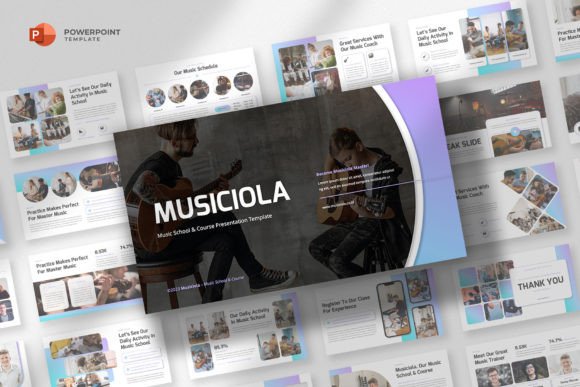
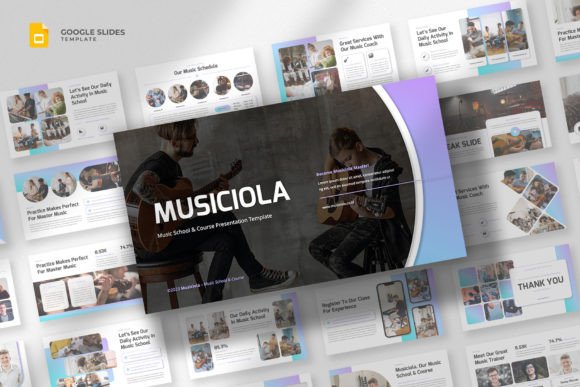
When evaluating presentation tools, functionality is just as important as aesthetics. The Musiciola - Music School Course Google Slides Template is engineered to reduce friction in the creation process. One of the most significant advantages is its compatibility. By providing both Google Slides and .PPTX file formats, it ensures that users can work in their preferred environment. Whether you are collaborating in real-time with colleagues via Google Workspace or finalizing a deck in Microsoft PowerPoint, the transition is seamless.
The inclusion of 25 total slides provides a comprehensive framework. This is not just a handful of title pages; it is a complete narrative structure. You typically find sections for introductions, team profiles, course details, pricing structures, testimonials, and contact information. Having this skeleton already in place saves hours of initial setup time. Instead of staring at a blank screen wondering how to start, you begin with a solid foundation and simply populate it with your specific content.
Customization and Accessibility
A common concern with templates is the fear that they look too generic. However, modern templates are designed with customization in mind. The resizable and editable graphics mean that you are not stuck with fixed elements. If you need to emphasize a particular instrument or adjust the layout to accommodate more text, you can do so without breaking the design integrity. Furthermore, the use of 100 free fonts eliminates licensing headaches. You do not need to purchase expensive typefaces or worry about font substitution errors when sharing files with others. The typography is chosen to be legible and stylish, ensuring that your text is easy to read on both large projector screens and small mobile devices.
The 16:9 wide screen layout is the current standard for most monitors, laptops, and TVs. Designing in this aspect ratio ensures that your presentation looks crisp and professional on modern hardware, avoiding the awkward black bars associated with older 4:3 formats. This attention to technical detail reflects a broader commitment to quality that prospective students will notice.
Integrating Multimedia for Engaging Lessons
Music is an auditory and visual art form, yet many presentations remain static and text-heavy. A dynamic slide deck should serve as a springboard for multimedia integration. While the template itself does not include images for copyright reasons, it is structured to accommodate them beautifully. You can easily embed video links to student performances, audio clips of faculty demonstrations, or high-resolution photos of your facilities.
For instance, when describing a musician training program, you might include a slide with a brief video clip of a masterclass in action. This provides tangible proof of the teaching style and energy of the classroom. Similarly, for an art school collage or performance class, visual portfolios can be integrated directly into the flow of the presentation. The clean, minimalist background of the template ensures that these media elements stand out rather than competing with busy design motifs.
Practical Considerations for Adoption
Before adopting any new tool, it is wise to consider the learning curve and support available. The inclusion of a Help file (README_INFO.txt and HELPFILE.pdf) is a crucial feature often overlooked in cheaper templates. These documents guide you through the editing process, explaining how to change colors, replace placeholders, and export files correctly. This support structure is particularly beneficial for those who may not be tech-savvy, ensuring that the investment in the template yields immediate returns without frustration.
Another practical benefit is the cost-effectiveness compared to hiring a designer. For independent music teachers or small academies operating on tight budgets, the ability to produce agency-quality materials in-house is a significant financial advantage. It allows you to allocate resources toward better instruments, marketing ads, or scholarship funds rather than administrative overhead.
Enhancing Professional Credibility
In the digital age, your online presence and digital assets are often the first point of contact. A sloppy or outdated presentation can undermine years of hard work. Conversely, a polished, modern deck signals that you are current, organized, and serious about your craft. When you use a professional Music School Course Google Slides template, you are not just saving time; you are investing in your brand’s reputation.
Consider the scenario of a parent comparing two local music schools. Both offer similar lessons and prices. However, one school presents a clear, visually engaging, and well-structured overview of their methodology, faculty credentials, and student success stories, while the other sends a plain text email or a cluttered Word document. The psychological impact is profound. The former appears more established and trustworthy, even if the actual teaching quality is identical. Perception drives decision-making, and design is a powerful tool for shaping that perception.
Final Thoughts on Implementation
To get the most out of this resource, take the time to customize it thoroughly. Replace all placeholder text with your unique voice. Use high-quality images that reflect the actual atmosphere of your school. Ensure that your contact information is prominent and accurate. Treat the template as a canvas, not a constraint. By combining the structural efficiency of the Musiciola template with your unique educational philosophy, you create a compelling narrative that resonates with students, parents, and partners alike.
Ultimately, the goal of any educational presentation is to inspire confidence and excitement. Whether you are pitching a new music art performance class or outlining a semester-long curriculum, the right tools empower you to focus on what you do best: teaching music. With a professional, editable, and versatile slide deck, you remove the barriers between your expertise and your audience, paving the way for growth and success in your musical enterprise.