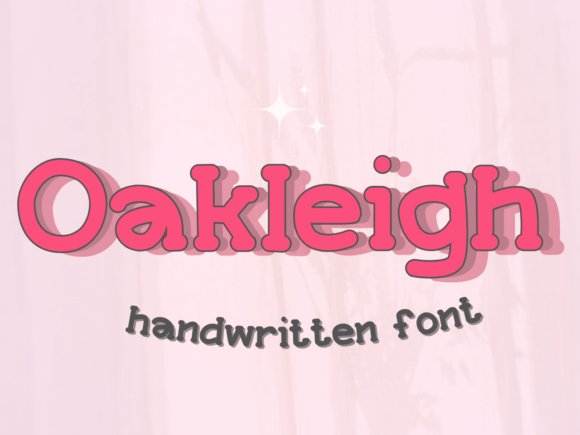
Oakleigh: Redefining Digital Typography with Handwritten Authenticity
In the expansive world of digital design, where sans-serif minimalism often dominates corporate interfaces and bold serifs command attention in editorial layouts, there remains a profound human need for warmth, personality, and tactile connection. This is where Oakleigh emerges not merely as a typeface, but as a design philosophy. It bridges the gap between the precision of vector graphics and the organic imperfection of human handwriting. By choosing to integrate a font that carries its own distinct identity, designers, educators, and creators can transform static text into an emotional experience. The decision to use a handwritten style is not just aesthetic; it is strategic, offering a unique voice in a saturated visual landscape.
The Psychology of Handwritten Type in Modern Design
Typography is more than the arrangement of letters; it is the voice of your content. When we encounter standard system fonts, our brains process them as informational and neutral. However, when we encounter a font like Oakleigh, which mimics the flow of a pen on paper, our cognitive response shifts. We perceive authenticity, effort, and personal touch. This psychological impact is crucial for brands and individuals looking to establish trust and relatability.
The "weird art" aspect of unique typography allows for a break from the rigid grid systems that define much of modern web and print design. It introduces an element of surprise and delight. Whether used in a logo or a greeting card, the irregularity of the strokes suggests that a human being was behind the creation, fostering a deeper connection with the audience. This is particularly valuable in industries where community and personal interaction are paramount, such as education, handmade crafts, and boutique retail.
Versatility Across Creative Platforms
One of the most significant advantages of a well-designed handwritten font is its adaptability. Oakleigh is engineered to perform across a diverse array of mediums, ensuring that your creative vision remains consistent whether it is viewed on a screen or held in hand.
Digital Planning and Note-Taking
The rise of digital planning has created a new ecosystem for typography. Apps like Goodnotes and Notability have turned tablets into powerful productivity tools, but they often lack the personal flair of a physical notebook. Integrating a font like Oakleigh into digital planners, journals, and study notes adds a layer of customization that standard keyboard inputs cannot match. For students and professionals, using a distinctive script for headers or key concepts can improve memory retention and make the review process more engaging. The visual variety breaks the monotony of uniform text, making long documents easier to navigate and more enjoyable to read.
Crafting and Physical Production
For makers using cutting machines like Cricut or Silhouette, the quality of the font file is critical. A robust typeface must maintain its integrity when scaled up for large decals or down for intricate jewelry tags. Oakleigh is designed with clean vectors, ensuring that every curve and terminal renders smoothly without jagged edges. This makes it ideal for creating custom wedding invitations, birthday cards, and home decor items. The ability to manipulate individual characters allows crafters to create unique monograms and logos that stand out in marketplaces like Etsy. The "bubbly" or rounded characteristics often found in such fonts add a friendly, approachable vibe to physical products, appealing to customers looking for something special and non-mass-produced.
Enhancing Educational Materials
Educators face the constant challenge of keeping students engaged. Traditional textbooks and worksheets can sometimes feel sterile and intimidating. By incorporating a handwritten font into teaching materials, teachers can soften the tone of the content. This is particularly effective in early childhood education, where the visual appeal of letters can aid in literacy development. A font that resembles natural handwriting helps children recognize letter forms in a context that feels familiar and less mechanical.
Furthermore, for higher education or professional training, using a distinct typeface for quotes, sidebars, or instructional notes can help differentiate between core content and supplementary information. It acts as a visual cue, guiding the learner’s eye and breaking up dense blocks of text. This typographic hierarchy improves readability and reduces cognitive load, allowing students to focus on the material rather than struggling through walls of uniform text.
Branding and Identity Construction
For small business owners and entrepreneurs, branding is about storytelling. A logo or brand mark using a unique script like Oakleigh tells a story of craftsmanship and individuality. It signals to the consumer that the brand values creativity and attention to detail. This is evident in sectors ranging from bakery shops to consulting firms. A retro-inspired serif might convey stability and tradition, while a modern handwritten script conveys innovation and approachability.
When designing a brand identity, consistency is key. Using the same distinctive font across social media graphics, email newsletters, and packaging creates a cohesive visual language. It ensures that no matter where a customer encounters the brand, the feeling remains the same. The novelty of the font accentuates the work, making it memorable in a feed full of generic templates. It allows the brand to carve out a specific niche, appealing to audiences who value aesthetics and uniqueness.
Technical Considerations for Designers
While the aesthetic benefits of handwritten fonts are clear, their implementation requires technical awareness. Not all script fonts are created equal. Some suffer from poor kerning, where letters overlap awkwardly, or lack the necessary glyphs for international languages. Oakleigh is designed with these practicalities in mind, offering a comprehensive character set that includes numbers, symbols, and multilingual support. This ensures that the font can be used in diverse contexts without compromising on functionality.
Designers should also consider legibility. While the artistic flair of a font is important, it must remain readable at various sizes. Testing the font in different environments—such as on a mobile screen, in a printed brochure, or as a large headline—is essential. The balance between whimsy and clarity is delicate. A font that is too abstract may fail to communicate its message, while one that is too simple may lose its distinctive charm. Oakleigh strikes this balance by maintaining clear letterforms while incorporating stylistic alternates that add character.
The Future of Typographic Expression
As technology advances, the line between digital and analog continues to blur. Fonts are no longer static entities; they are dynamic tools that can adapt to user interaction and context. The demand for unique, expressive typography is growing as users seek more personalized digital experiences. We are moving away from the one-size-fits-all approach of the early internet era toward a more nuanced understanding of how type influences emotion and behavior.
In this evolving landscape, fonts like Oakleigh represent the next step in typographic evolution. They are not just tools for displaying text; they are instruments for expression. Whether used in a vintage-style poster, a modern app interface, or a child’s learning worksheet, they bring a sense of humanity to the digital realm. The ability to choose a font that aligns with your specific creative vision empowers designers to push boundaries and explore new artistic territories.
Ultimately, the choice of typography is a reflection of intent. By selecting a font with its own identity, you are making a statement about the value of individuality and the power of design to connect people. Whether you are a teacher looking to inspire students, a crafter creating heartfelt gifts, or a business owner building a brand, the right font can elevate your work from ordinary to extraordinary. Embrace the art of typography, experiment with different styles, and let your letters speak with a unique voice. The novelty of a well-designed font is not just a trend; it is a timeless element of effective communication.